One of the big draws of any visit to Latin America is the many archaeological sites, many of which today are UNESCO World Heritage Sites, and new sites are continually being re-discovered. It is in these archaeological sites where the ancient history of pre-Columbian empires and civilisations is still visible, walkable, and sometimes climbable. These are not just static ruins, but windows into how people once lived, ruled, prayed, and died.
Today, in particular in countries like Guatemala, Peru, Bolivia and elsewhere, descendants of the original inhabitants remain and carry on their traditions in language, textiles etc. which makes these places so beguiling.
Some archaeological sites are familiar icons; others lie hidden in dense jungle or remote mountainsides. A few still receive barely a trickle of foreign visitors. The map of ancient Latin America is rich and irregular, and these sites help anchor the story. Everyone’s heard of Machu Picchu and Chichén Itzá. These iconic sites are magnificent, but they’re only the final chapters of a much older, more complex story.
Long before the Inca carved temples into the Andes or the Maya aligned cities to the stars, earlier civilisations were building sky-high fortresses, carving tombs into mountainsides, and shaping vast ceremonial cities from mud, stone, and myth. Many of their stories remain buried, some literally.
The Inca empire rose astonishingly fast, less than a century before the Spanish conquest. Their genius lay in synthesising what came before: administrative roads, agriculture, and ceremonial architecture scaled to imperial size.
In Peru, the sprawling adobe capital of Chan Chan, built by the Chimú, is still being brushed from the desert sands. New Nazca temples and geoglyphs are continually being revealed by drone. In the northern highlands, parts of Kuelap and Chavín are only now re-emerging from the jungle, and every year adds new rooms, passageways, and puzzles.
Similarly, while the Aztecs were in power when the Spanish arrived, they were inheritors, not originators, of Mesoamerica’s great urban, scientific, and religious traditions. From the earliest pyramids at Teotihuacán to the sophisticated glyph-writing Maya, these cultures developed independently but shared many features: astronomy, ritual calendars, temple complexes, and an enduring fascination with death, time, and the cosmos.
Compared to the Peruvian Heartlands or Mexico, Guatemala and the Yucatan, Colombia’s and Northern Peru’s ancient past is less codified. There are no surviving written languages or empires with clearly defined capitals. Instead, we find evocative fragments, vast stone figures in mountain valleys, painted tombs carved into remote hillsides, gold artefacts of astonishing craftsmanship, and clues to societies that left little written trace but much cultural legacy.
Many of the Mayan sites in Guatemala, Mexico and elsewhere are still buried deep under the jungle, which is ironic given that one of the reasons for the cities being abandoned was a shortage of water. Today LiDAR technology is increasingly being used to strip away the vegetation and see the pyramids, buildings and roads that lie underneath. In particular in Calakmul and its rival Tikal new structures are continually being discovered.
While not typically represented in monumental ruins, the Mapuche in modern day Chile have left a cultural legacy more visible in language, tradition, and ongoing political identity. They successfully resisted both the Inca and Spanish empires, maintaining control of large parts of southern Chile and Argentina well into the 19th century.
To reach many of these places, you have to go beyond the tourist trail. Yes, the Inca Trail is famous, but what about the multi-day hikes around the tomb clusters of Tierradentro, or the lesser known cliffside burials of Revash? Even San Agustín is not a single site, but a sacred landscape scattered with giant stone guardians. And across the Mayan world, cities like Calakmul still lie half-covered by jungle, their pyramids climbable, their plazas eerily quiet.
This is not just about archaeology. It’s about movement, discovery, and the thrill of reaching places few others do. Latin America rewards the curious traveller, especially those willing to step off the map and into the past.


Chichén Itzá, Chan Chan, Machu Picchu, San Agustín, Palenque
- Key Archaeological Sites – By Civilisation
- Categorisation of Sites
- Featured Sites
- Civilisations of the Americas – A Timeline
- Reflections from the Road: Civilisations in Context
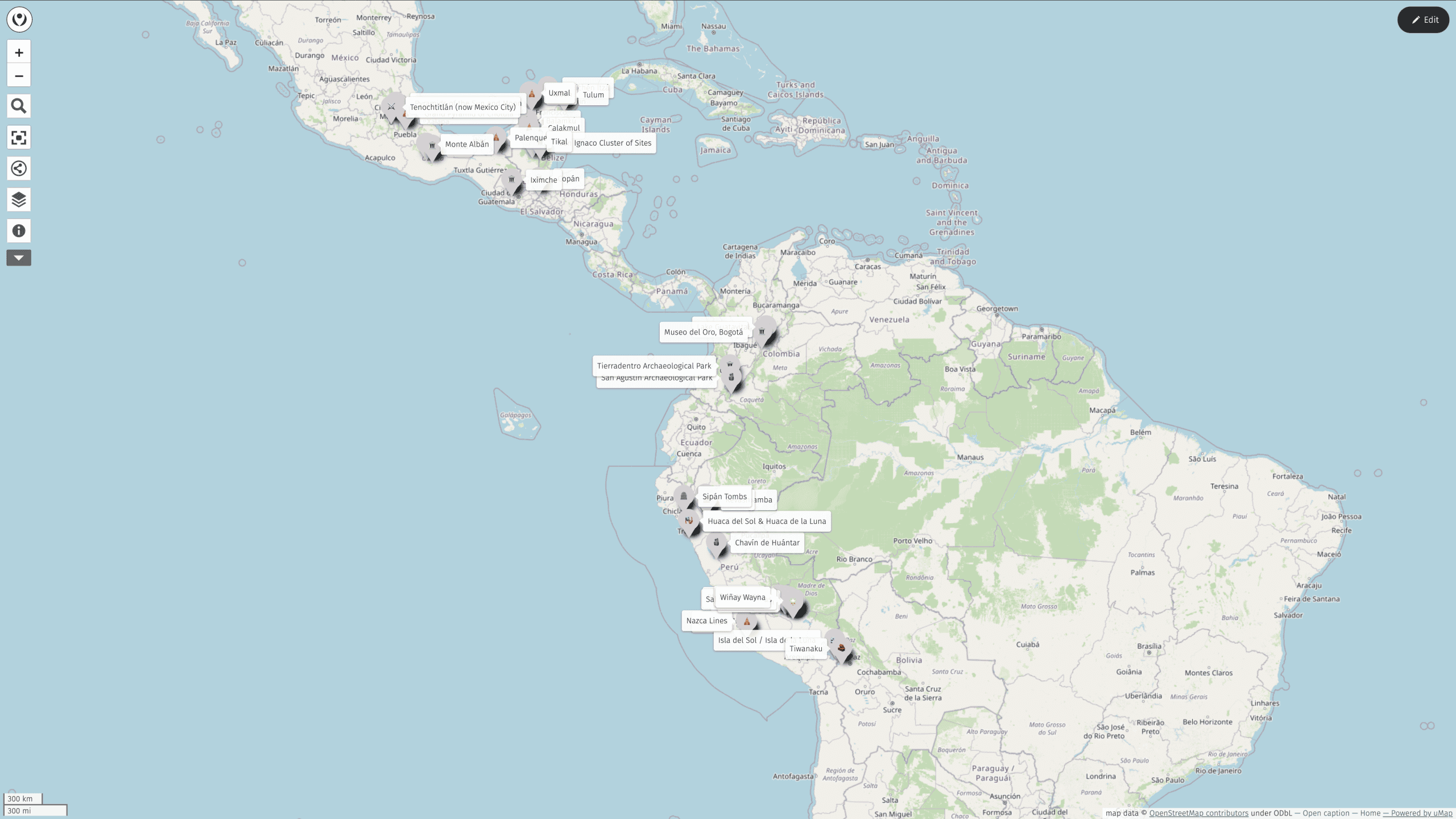
- Interactive Map
🏛️ Key Archaeological Sites – By Civilisation
There are many key archaeological sites associated with each culture, each one below aligned to its underlying civilisation includes a short summary of its significance. For fuller details please refer to the individual blog pages in the underlying links.
⚡ Small Mounds for Pachamama
In highland Peru and Bolivia, even today you may see little stone piles or earth mounds. These are offerings to Pachamama, the Earth Mother. This ancient practice predates the Inca and continues today.
🌟 Inca (1438–1533 AD) – Empire at Speed
- Machu Picchu – A royal Inca estate with ceremonial, astronomical, and administrative functions, showcasing high-altitude urbanism.
- Cusco – The sacred and political capital of the Inca Empire, laid out in the shape of a puma.
- Hathun Rumiyoq – Iconic Inca wall with the famous twelve-angled stone, an emblem of their stone masonry.
- Sacsayhuamán – A formidable fortress with massive interlocking stones, symbolising imperial power and ritual defence.
- Ollantaytambo – Both a living town and an Inca military and agricultural centre with engineered terraces and astronomical alignment.
- Pisac – An Inca hilltop citadel with military, religious, and agricultural components.
- Moray – Unique terraced depressions likely used as an agricultural laboratory.
- Salineras de Maras – Ancient salt pans still in communal use, possibly predating the Inca.
- Runkurakay, Sayacmarca, Phuyupatamarca, Wiñay Wayna – Key sites along the Inca Trail showcasing rest stops, ceremonial functions, and water engineering.
- Isla del Sol / Isla de la Luna – Sacred islands on Lake Titicaca tied to Inca origin mythology.
🧟 Andean Mummies
The famous Ice Maiden “Juanita” in Arequipa is a stark reminder of Inca ritual sacrifice. Mountain mummies were typically buried with rich offerings, suggesting their honoured status. The Leymebamba museum near Chachapoyas houses dozens of high-altitude mummies wrapped in funerary bundles.
🗿 Chavín (900–200 BC) -The First Unifier
- Chavín de Huántar – One of the earliest pan-Andean religious centres, known for its underground galleries and feline deities.
✈️ Nazca & Paracas (500 BC – 500 AD) – Lines in the Desert
- Nazca Lines – Enigmatic geoglyphs of animals and shapes visible from the sky, likely for ceremonial or astronomical use.
- Cahuachi – Ceremonial centre of the Nazca, with adobe pyramids and evidence of ritual gatherings.
- Paracas – Known for elaborate textiles and cranial deformation practices, as well as cliffside necropolises.
🐟 Moche, Lambayeque, and Chimú (100–1470 AD) – Masters of the North Coast
- Huaca del Sol & Huaca de la Luna – Twin Moche pyramids with intricate murals and ritual sacrifice evidence.
- Sipán Tombs – Lavish burials revealing royal status and metallurgical skill.
- Chan Chan – Capital of the Chimú, the largest adobe city in the Americas, rich in sea-themed reliefs, a sign of how this desert empire thrived on the Pacific coast. Today, its restoration battles erosion, looting, and neglect.
🧱 Tiwanaku (500–1000 AD) – High Andean Origins
- Tiwanaku – A pre-Inca highland city with monumental stone gateways and sophisticated drainage and solar alignment.
🏛 Wari (600–1000 AD)
- Huari (Ayacucho) – Central highland capital of the Wari Empire, with defensive compounds.
- Pikillacta – A southern administrative centre near Cusco with grid-planned urbanism.


Sacsayhuamán, Machu Picchu, Chavin de Huántar, Chan Chan, Tiwanaku, Nazca Lines, Huaca de Luna
🌿 Chachapoya (600–1500 AD) – The Cloud Warriors
- Kuelap – A hilltop fortress of the “Cloud People” with circular structures and thick walls.
- Leymebamba – Museum housing Chachapoya mummies and artefacts.
- Revash – Cliffside tombs painted red and white, resembling miniature houses.
📿 Quipus – Knotted Memory Systems
Seen in Inca cities and also displayed in museums near Lambayeque and Chachapoyas, quipus are bundles of knotted cords used for accounting, census-taking, and possibly storytelling. While some functions are well understood, many remain undeciphered, a tantalising thread back to Andean knowledge systems.
🪦 San Agustín Cultures (1000 BC – 800 AD) – Monumental Mystery
- San Agustín Archaeological Park – Hundreds of monumental stone figures and burial mounds across a ceremonial landscape. No one knows exactly who built the statues, but they share motifs (felines, eagles, serpents) with other Andean traditions.
🪦 Tierradentro (600–900 AD) – Painted Tombs in the Hills
- Tierradentro Archaeological Park – Hypogea / Underground tombs painted with geometric red and black motifs, linked to ancestor worship. Access remains difficult, even today it’s a multi-step journey
💰 Muisca (600–1500 AD) – El Dorado
- Lake Guatavita – Inspiration for the El Dorado legend, associated with gold offerings.
- Museo del Oro (Bogotá) – Rich in gold pieces and shamanic artefacts, including the famous Muisca raft.
👑 The Muisca Gold Raft
This small, intricate artefact from the Bogotá Gold Museum depicts a sacred ritual on Lake Guatavita, the original source of the El Dorado legend. It symbolises how gold in Indigenous culture was spiritual, not economic, often linked to shamanic ceremonies and offerings.
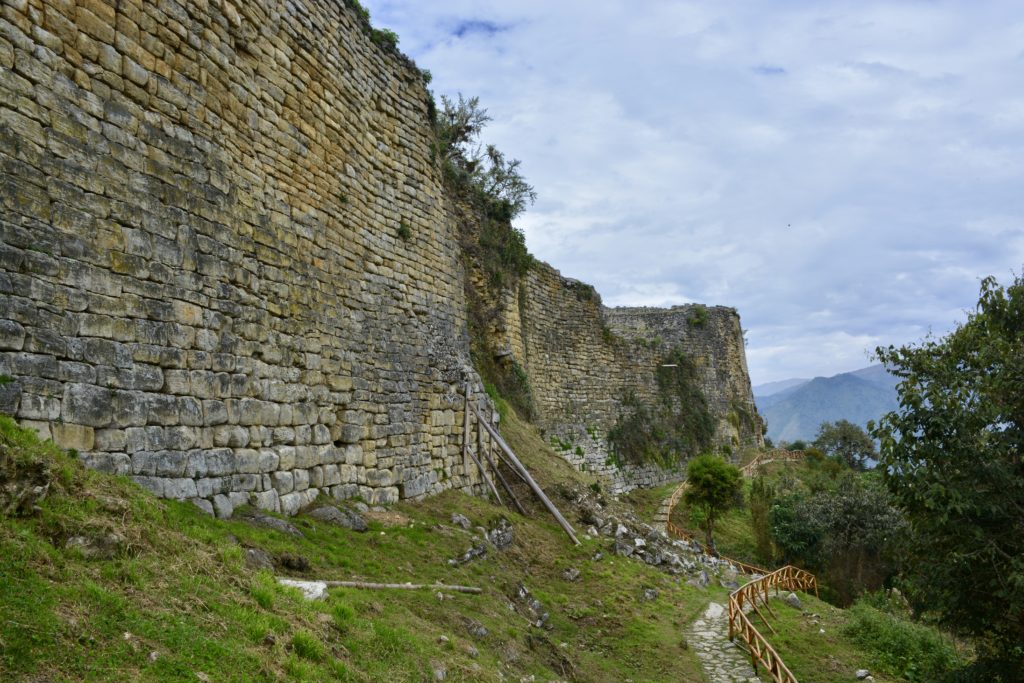


Kuelap, Revash, Tierradentro, San Agustín, Muisca Raft
🌀 Zapotec & Mixtec (500 BC – 1521 AD)
- Monte Albán – Mountaintop city with ball courts, tombs, and a 1,000-year occupation history.
- Mitla – Elaborate mosaic fretwork and burial chambers, important to Zapotec and Mixtec rituals.
🛕 Teotihuacán (100 BC – 550 AD)
- Teotihuacán – One of the largest cities of the ancient world, with grand pyramids and the Avenue of the Dead.
🐆 Classic Maya (250–900 AD) – Pyramids Deep in the Jungle
- Tikal – Sky-piercing pyramids set in dense jungle, a powerful Classic Maya city-state.
- Palenque – Famous for elegant temples and the tomb of King Pakal.
- Copán – Distinguished for its detailed stelae and hieroglyphic stairway.
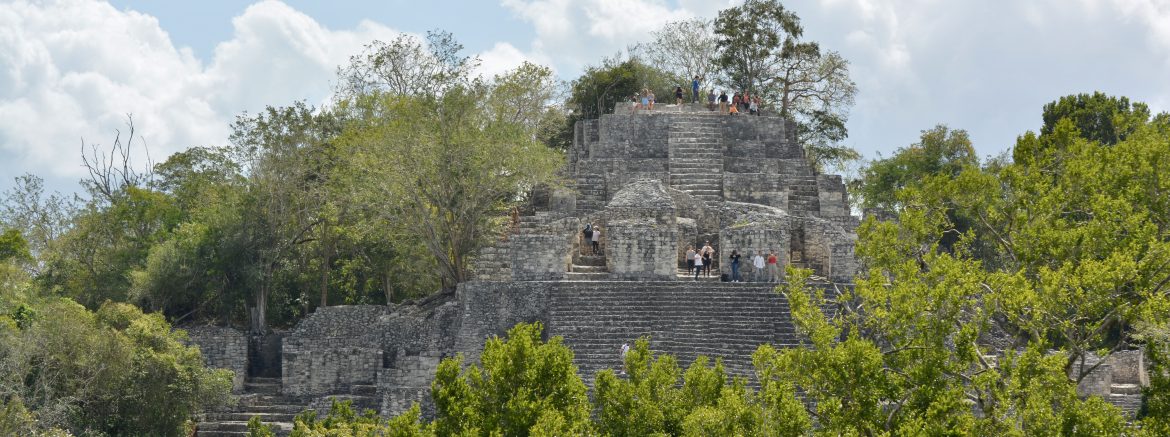
- Calakmul – Deep jungle capital, rival of Tikal, with massive twin pyramids.
- Uxmal – Centre of the Puuc style with ornate stonework and smooth curves.
- Kabáh – Noted for its massive Codz Pop façade covered in stone masks.
- Balamkú – Smaller site with extraordinary interior murals.
- Cahal Pech – Hilltop Maya centre with long occupation history.
- El Pilar – Cross-border Maya city partly reclaimed by jungle.
- Xunantunich – Ceremonial centre with fine friezes and panoramic views.


Monte Albán, Teothuacán, Tikal, Calakmul, Copán, Uxmal, Kabáh
🏹 Postclassic Maya & Toltecs (900–1200 AD) – Grand Pyramids
- Chichén Itzá – Blended Toltec and Maya site with stepped pyramids, ball court, and astronomical observatory.
- Tulum – Coastal fort and trading post with striking sea views.
- Iximché – Highland Kaqchikel Maya capital, later site of early Spanish encounters.
⚽ Ball Games and Blood – The Ritual Courts of the Maya
Maya ball courts are more than sports arenas. These games had cosmological significance, symbolising the struggle between life and death. In some cases, losing team members, or captains, may have been sacrificed in connection with elite funerary or religious events.
⚔ Aztecs / Mexica (1300–1521 AD) – The Final Empire
- Tenochtitlán (Templo Mayor) – Ceremonial core of the Aztec capital, now under Mexico City.
🐍 Epi-Classic Central Mexico – World’s Largest Pyramid by Area
- Cholula – Vast pyramid buried under a hill, topped by a colonial church; sacred site reused over centuries.


Chichén Itzá, Tulum, Cholula, Cueva de las Manos
Aztecs vs Maya: What’s the Difference?
Many assume the Aztecs and Maya are two sides of the same coin. In reality, the Maya lasted far longer and developed much more independently. The Aztecs came late, absorbed earlier ideas, and ruled through fear and tribute, until the Spanish toppled them with Indigenous allies.
✋ Early Patagonian Cultures (7000–1000 BC) – Prehistoric Rock Paintings
- Cueva de las Manos – Rock art site with stencilled hands and hunting scenes, the oldest known art in South America.
🔥 Mapuche (1200s onward) – Resistance and Survival in the Southern Cone
- Museums in Temuco, Valdivia, Puerto Varas – Exhibit Mapuche cultural continuity and resistance to conquest.
🛠️ Kuelap’s Fragile Walls, A Wake-Up Call from 2022
In April 2022, part of Kuelap’s southern outer wall collapsed, a visible crack in one of the Andes’ great pre-Inca fortresses. The cause: years of erosion, water damage, and neglect, worsened by the removal of the very vegetation that once helped stabilise the walls.
🌟 Categorisation of Sites
🔝 Popular Sites
- Machu Picchu – Peru
- Cusco – Peru
- Teotihuacán – Mexico
- Chichén Itzá – Mexico
- Tulum – Mexico
📈 Sites Sometimes Made Available as Add-ons by Specialist Travel Agents
- Tikal – Guatemala
- Palenque – Mexico
- Copán – Honduras
- Nazca Lines & Cahuachi – Peru
- San Agustín – Colombia
- Uxmul – Mexico
- Monte Albán – Mexico
- Isla del Sol – Bolivia
🥇 Sites Rarely Visited by International Tourists
- Kuelap – Peru
- Tierradentro – Colombia
- Chan Chan – Peru
- Huaca del Sol & Huaca de la Luna – Peru
- Chavín de Huántar – Peru
- Tiwanaku – Bolivia
- Calakmul – Mexico
- Cholua – Mexico
- Cueva de las Manos – Argentina
🐆 Jaguar Symbolism
Revered across Maya, Olmec, and Aztec cultures, the jaguar stood for night, the underworld, and royal power. Often depicted in elite burials and temple carvings — especially in sites like Copán and San Bartolo.
🐈⬛ Puma Symbolism
The Inca associated the puma with earthly strength and territorial power. Cusco was famously laid out in the shape of a puma, its “head” at Sacsayhuamán.
🦅 Eagle Symbolism
The eagle, seen as a solar and martial symbol, features in Aztec myth (e.g. founding of Tenochtitlán) and elite warrior cults. Common in Zapotec codices too.
🐍 Serpent Symbolism
The feathered serpent — Quetzalcoatl or Kukulkan — represented cosmic energy and rebirth. Snake iconography runs across Mesoamerica from Teotihuacán to Chichén Itzá.
🌟 Featured Sites
These four locations represent a mix of the iconic and the underexplored, offering a broad view of pre-Columbian civilisations across Latin America.
🏔 Machu Picchu – Peru
Perched high in the cloud forest, Machu Picchu is the jewel of the Inca Empire, a ceremonial and administrative citadel likely built for Emperor Pachacuti. Despite its fame, its precise purpose is still debated. The layout combines sun-worship temples, terraced farming, and astronomical alignments, all reached today via the fabled Inca Trail.
🔗 [Sacred Valley and Inca Trail] and 🔗 Cusco: Colonial and Inca City
🗿 San Agustín – Colombia
Deep in the green highlands of southern Colombia lies a forest of stone, hundreds of carved figures, from fierce warriors to abstract cosmological beings. No one knows exactly who built them or why. The statues are scattered across hillsides and burial mounds, suggesting San Agustín was a pan-regional ceremonial centre used by diverse cultures over centuries.
🔗 Colombia’s Archaeological Heartland
🏯 Chan Chan – Peru
A vast, labyrinthine city made entirely of adobe, Chan Chan was the capital of the Chimú empire and the largest mud-brick city in the Americas. Its walls are decorated with wave patterns, fish, and other sea motifs, a sign of how this desert empire thrived on the Pacific coast. Today, its restoration battles erosion, looting, and neglect.
🔗 Huanchaco: Pre-Inca Civilizations of the North
🌳 Calakmul – Mexico
Deep in the lowland jungle near the Guatemala border, Calakmul was one of the great Maya superpowers, a fierce rival to Tikal. Its ruins are still partly covered by forest, giving it an Indiana Jones atmosphere. The twin pyramids rise above the canopy, offering sweeping views of both history and wilderness.


Machu Picchu, Machu Picchu, Chan Chan, San Agustín, Calakmul
🗺 Civilisations of the Americas – A Timeline
| Civilisation / Culture | Approx. Dates | Core Region | Notable Achievements |
|---|---|---|---|
| Early Patagonian Cultures | 7000–1000 BC | Patagonia (Argentina/Chile) | Rock art (e.g., Cueva de las Manos) |
| Olmec | 1500–400 BC | Gulf Coast (Mexico) | Colossal heads, early writing, influence on later Mesoamerica |
| Chavín | 900–200 BC | Northern Highlands (Peru) | Religious centre, underground temples, feline iconography |
| Zapotec | 500 BC – 800 AD | Oaxaca Valley (Mexico) | Monte Albán city planning, early glyphs |
| Maya (Preclassic–Postclassic) | 2000 BC – 1697 AD | Southern Mexico, Guatemala, Belize, Honduras | Astronomy, writing, mathematics, monumental cities |
| Teotihuacán | 100 BC – 550 AD | Central Mexico | Urban planning, massive pyramids |
| Nazca & Paracas | 500 BC – 500 AD | South Coast (Peru) | Geoglyphs, textiles, cranial modification |
| Moche | 100–800 AD | North Coast (Peru) | Ceramic portraiture, ritual sacrifice, pyramids |
| Tiwanaku | 500–1000 AD | Bolivia / Lake Titicaca | Stone masonry, ritual cosmology |
| Wari | 600–1000 AD | Central Highlands (Peru) | Early empire model, administrative innovation |
| San Agustín | 1000 BC – 800 AD | Southern Colombia | Megalithic statuary, funerary rites |
| Tierradentro | 600–900 AD | Southern Colombia | Painted underground tombs |
| Chachapoya | 600–1500 AD | Northern Andes (Peru) | Cliff tombs, fortress cities |
| Lambayeque / Sicán | 700–1375 AD | North Coast (Peru) | Metallurgy, elite tombs |
| Chimú | 900–1470 AD | North Coast (Peru) | Adobe city of Chan Chan, irrigation |
| Mixtec | 800–1521 AD | Oaxaca (Mexico) | Codices, mosaic tombs (e.g. Mitla) |
| Toltecs | 900–1200 AD | Central Mexico | Warrior iconography, early influence on Aztecs |
| Aztecs / Mexica | 1300–1521 AD | Central Mexico (Tenochtitlán) | Empire-building, human sacrifice, markets |
| Muisca | 600–1500 AD | Colombian Andes | Goldwork, El Dorado myth |
| Inca | 1438–1533 AD | Andes (Peru, Bolivia, Ecuador) | Road systems, masonry, quipus, statecraft |
| Mapuche | 1200s onward | Southern Chile/Argentina | Resistance, silverwork, oral traditions |
This timeline is a simplification. Many civilisations overlapped or evolved from earlier cultures. For instance, the Chimú inherited and adapted technologies from Moche and Lambayeque traditions. In Mesoamerica, Maya Classic cities rose even as Teotihuacán fell.
Rather than a linear progression, pre-Columbian history is a tapestry, with vibrant threads of innovation, adaptation, and rediscovery.
💡 Reflections from the Road: Civilisations in Context
Looking back on the sheer range of sites I’ve visited across Latin America, from windswept tombs in Tierradentro to the layered platforms of Calakmul, the lunar temples of the Moche coast to the highland fortresses of the Inca, I’m struck not just by their scale or mystery, but by their sophistication.
These weren’t “primitive” societies awaiting European arrival. They were advanced, literate, and deeply attuned to their environments.
- Calendars and Cosmology: The Maya tracked celestial cycles with a precision that rivalled, and sometimes surpassed, their European contemporaries. Their long-count calendar could project millennia forward and backward.
- Mathematics and Zero: The concept of zero, so often linked to the Indian-Arabic number system, was in use in Mesoamerica centuries earlier. This abstract thinking underpinned both astronomical predictions and bureaucratic record-keeping.
- Engineering and Architecture: The interlocking stones of Sacsayhuamán or Tiwanaku fit so precisely that even today, earthquakes have not dislodged them. Many structures align to solstices, equinoxes, and star paths, revealing an integration of belief, science, and architecture.
- Metallurgy and Material Culture: While not working iron or steel, Andean cultures mastered alloys like tumbaga (an alloy mixing gold and copper) and produced exceptional goldsmithing, textiles, and ceramics. The fine Paracas weavings or Chimú shell inlays are not only beautiful, but conceptually complex. Local textiles today across the region, but especially in Guatemala, and the Andean Countries of Peru, Bolivia and Ecuador continue to inspire most visitors.
And yet, they lacked what Eurasia had: the wheel (in practical use), gunpowder, horses, or iron weapons. Their monumental cities were built without draught animals or pulleys, often through vast communal labour systems like the Inca mita (mandatory labour tributes for public works etc.).
There’s a humbling sense that these civilisations evolved along different logics. They were not failures for not becoming Europe, they were simply different answers to the challenge of how to organise society, tell time, move water, worship the stars.
Occasionally one wonders: were there unnoticed connections? Between the glyphs of Copán and My Son in Vietnam? Between the truncated pyramids of Mexico and the ziggurats of Mesopotamia? We may never know, but the comparisons stretch the imagination and deepen respect.
Travelling across these sites, what emerges is not nostalgia, but a renewed sense of curiosity. Latin America’s pre-Columbian past isn’t a footnote to European expansion, it’s a vast, creative world of its own, still revealing itself stone by stone.
🗺️ Interactive Map