This is the third in a three-part series on the National Parks and Treks of Latin America, focusing on landscapes shaped from above.

Iguaçu Falls from Brazilian Side
This section turns to landscapes shaped from above, the result of rainfall patterns, wind systems, latitude, and the dramatic terrain produced by the forces in Part 2. Here, it’s water, sun, biodiversity, and erosion that define the landscape. From tropical rainforests to coastal mangroves, jungle-shrouded ruins to misty cloud forests, these are ecosystems at the intersection of climate and topography. Life here thrives because of the shelter, altitude, and moisture created by the mountains, the flourishing skin atop the planet’s restless bones.
- Sacred Valleys and Forgotten Falls: Where Culture Meets Terrain
- Where the Wild Still Rules: Forests, Rivers, and the Green Unknown
- Ends of the Earth: Coasts, Cliffs, and Marine Encounters
- Nature as Narrative: Rewilding, Rediscovery, and Resilience
- Principal National Parks
- Reflections from the Road
- Interactive Map
1. Sacred Valleys and Forgotten Falls: Where Culture Meets Terrain
Beyond the marquee treks and highland circuits lies another class of journey, one that prioritises intimacy over intensity, and connection over conquest. These are the sacred valleys and hidden routes where archaeology, ecology, and oral history converge. They may not require permits or porters, but they leave a lasting mark all the same.
Northern Peru’s Chachapoyas region remains one of Latin America’s best-kept trekking secrets. Here, mist-veiled trails lead to the twin giants of Gocta and Yumbilla Falls, some of the world’s highest waterfalls, yet remarkably uncrowded. The walks to reach them cut through farmland, forest, and forgotten clearings, revealing the slow encroachment of jungle over once-sacred terrain. Their presence is both humbling and exhilarating, with only birdsong and falling water for company.
Further north, Colombia’s Tierradentro offers one of the continent’s most unique trekking experiences. A network of trails connects underground tombs carved into the hills, their painted interiors still vibrant with geometric symbols and spiritual resonance. The journey between sites is half the reward, climbing ridges, passing villages, and crossing suspension bridges that sway above hidden gorges. It’s archaeology by footpath, blending discovery with local rhythm.
Nearby San Agustín continues this theme of sacred geography. Though more famous for its carved stone figures, the surrounding landscape invites exploration, gentle treks along rivers, past waterfalls, and through cattle-flecked hills where ancient cultures once thrived. The hike to El Tablón or down to the Magdalena River is less a route than a meditation, on the stones, on the stories, on the silence.
Colombia’s Valle de Cocora is more photogenic than secret, but the experience of walking among the world’s tallest palm trees is still otherworldly. These wax palms rise like green spires through the mist, lining ridges and swaying eerily in the wind. The loop trail through cloud forest and over narrow footbridges reveals just how rich this ecosystem is, from hummingbirds to orchids to stories of conservation and revival.
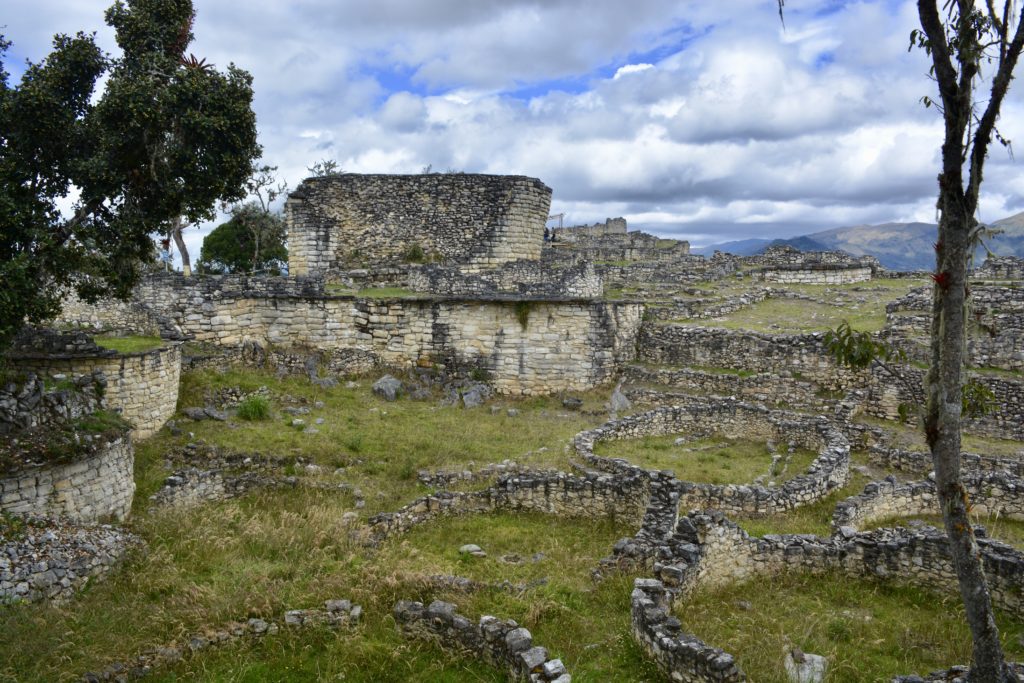
Peru’s Kuelap fortress, high above the Utcubamba Valley, adds yet another layer of depth. Reached by cable car or long trek, it feels like an inverse Machu Picchu, equally monumental, but with far fewer visitors. Trekking the old trails around it opens views across deep valleys and forgotten staircases, the kind of terrain that whispers more than it shouts. Here, history sits heavily, wrapped in moss and memory.
Guyana’s Kaieteur Falls stands as an outlier in geography but fits perfectly in spirit. Reached by light plane and short jungle trail, it’s a place of elemental force: a single-drop waterfall plunging over a horseshoe cliff into untouched rainforest. Trekking here isn’t about distance, but about awe, the quiet power of the Earth reminding us how much remains untamed.




Kaiteur Falls, Tierradentro, San Agustin, Kuelap, Gocta Falls, Cocora Valley
2. Where the Wild Still Rules: Forests, Rivers, and the Green Unknown
Beneath the canopy of Latin America’s forests lies an entirely different trekking world, one of shadow, sound, and deep green. These are not trails that reveal themselves easily. Instead, they ask for patience, observation, and a willingness to slow down. From the cloud forests of Costa Rica to the riverways of the Amazon, walking here is as much about wildlife as it is about wilderness.
In the Amazon basin, particularly around Leticia, Manaus, and Iquitos, most movement is by boat, but forest paths fan out from eco-lodges and riverside communities. These trails offer short but rich encounters with rainforest life: poison dart frogs, towering ceibas, howler monkeys, and the ever-present hum of insects. In Colombia, reserves near Leticia blend jungle trekking with canopy walks and community-run conservation, often revealing the tension between preservation and encroachment.
🐋 River Giants: Manatees and Pink Dolphins
In the still backwaters of the Amazon, extraordinary creatures glide just beneath the surface. Manatees, elusive and gentle, inhabit the murky shallows near Leticia and also in Guyana, often glimpsed during slow boat rides or early morning canoe trips. Along the main Amazon River itself, especially between Leticia and Manaus, you may be lucky enough to spot the rare and charismatic pink river dolphins (botos), surfacing briefly with a splash and a flash of colour. Seeing either is a quiet thrill, a moment of wonder in a world still ruled by water.
Guyana’s Iwokrama Reserve offers a more structured forest trekking experience. Here, trails are managed in partnership with Indigenous communities and conservation scientists, threading through pristine rainforest with educational stops along the way. The canopy walkway is a highlight, suspended above the forest floor, it offers a new angle on ecology and the lives of birds and mammals otherwise hidden in the treetops. This is trekking as encounter: with knowledge, with fragility, and with hope.
The smaller jungles and wetlands of Suriname add further variation. At Anaula Nature Reserve, inland hikes lead through forest used for centuries by Maroon and Indigenous groups, while Bigipans Lagoon, reached by boat through a maze of canals, reveals bird colonies, mangrove channels, and the slow rhythms of tidal ecosystems. These parks lack major infrastructure but make up for it in intimacy and integrity.
Cloud forests offer yet another expression of this richness, ecosystems perched between mountain and jungle, wrapped in mist and carpeted with moss. Monteverde in Costa Rica is the most famous, and justly so: its trails combine biological diversity with conservation pedigree, offering encounters with hummingbirds, orchids, and resplendent quetzals. Trails are well-marked but still atmospheric, winding through dripping tunnels of green.
Elsewhere, Colombia’s Puracé National Park offers a more rugged, less visited alternative. Here, cloud forest trails lead to sulphurous fumaroles, while condors ride thermals above ancient peaks. The area is sacred to local communities and ecologically crucial as the source of three major rivers. In all these forest parks, the pace slows, the canopy rises, and the human footprint, at least momentarily, fades into the undergrowth.


Amazon (Leticia), Monkey Island (Leticia), Iwokrama Reserve, Jaguar Iwokrama Reserve, Scarlet Ibis, Bigipans, Analua Reserve
3. Ends of the Earth: Coasts, Cliffs, and Marine Encounters
Not all trekking involves going up, sometimes, the most powerful journeys trace the edge. Along Latin America’s coasts, nature delivers drama of a different kind: windswept cliffs, crashing waves, nesting colonies, and remote beaches where human presence is fleeting. These are places shaped as much by tide as by time, and walking them invites encounters that can be both thrilling and contemplative.
In Argentina, the Valdés Peninsula exemplifies this edge-of-the-world atmosphere. A UNESCO reserve where orcas are known to beach themselves in pursuit of sealion pups, it is one of the most remarkable marine environments on the continent. Hiking here means following coastal ridges and gravel tracks past colonies of elephant seals, cormorants, and guanacos. The wildlife is close, the landscape stark, and the sense of distance absolute.
Further south, Patagonia’s final fingers meet the sea in Tierra del Fuego. The national park there offers short but evocative treks through southern beech forest, alongside fjords and glacier-fed lakes. The trails are framed by myths of exploration and exile, Darwin, Magellan, and those who came before. Walk to the terminus of the Pan-American Highway and it really does feel like the end of the road, where weather and wildness take over.
Chile’s Parque Pinguino Rey offers another kind of endpoint, the only king penguin colony on the South American mainland. Access is controlled, trekking is limited, but the experience of seeing these regal birds in an open Patagonian setting is deeply moving. Similar emotions stir at Punta Tombo, home to Latin America’s largest Magellanic penguin colony, where dusty trails wind through thousands of burrows before giving way to the Atlantic surf.
🐧 Latin America’s Penguins: Not Just in Antarctica
Think penguins are exclusive to the Southern Ocean? Think again. Punta Tombo (Argentina) hosts over one million Magellanic penguins each breeding season, while Parque Pinguino Rey in Chile is the continent’s only mainland king penguin colony. Even the Ballestas Islands off Peru surprise visitors with Humboldt penguins darting between sea lions and cormorants, a reminder that cold currents bring Antarctic life far into the tropics.
In Colombia, Tayrona National Park blends marine and mountain. Reached only by trail, its palm-lined beaches are hemmed by jungle, with ancient archaeological sites hidden among the trees. The trek in is hot and sweaty, but it brings a sense of earned arrival, especially when the Caribbean finally appears through the foliage. The currents may be dangerous, but the views are unforgettable.
Elsewhere, on the Ballestas Islands off the coast of Peru, coastal wildlife thrives in a very different context, bird cliffs, guano deposits, and sea lion caves reached by boat. And on Chiloé Island in southern Chile, coastal hikes bring stories of selkies and shipwrecks, with wild beaches and peasant legends stitched into the landscape. These are not classic trekking routes, but they are no less powerful, walks where land ends and stories begin.


Valdés Peninsular, Tayrona NP, Ballestas Islands, Magellenic Penguins (Punta Tombo), King Penguins (Parque Pinguino Rey), Imperial Cormorants (Beagle Channel)
4. Nature as Narrative: Rewilding, Rediscovery, and Resilience
Across Latin America, protected areas are not just spaces of beauty or biodiversity, they are evolving stories of resistance, recovery, and reinvention. To trek through them is to move through layered histories: of Indigenous stewardship, colonial exploitation, modern conservation, and climate uncertainty. Trails, in this sense, are not just paths, they are narrative threads, connecting past to present and idea to action.
In Brazil’s Lençóis Maranhenses, resilience takes another form. Each rainy season, thousands of crystalline lagoons fill the white sand dunes near Barreirinhas, creating a surreal and shifting ecosystem. Scarlet ibis feed in creeks at sunset, barefoot hikes cross dune fields that change with the wind, and each visit feels unique. The national park exists in tension, between seasonal beauty and tourism pressure, between fragility and spectacle.
🐦 Birdlife in Full Colour
Latin America’s parks are alive with wings and colour. In Lençóis Maranhenses, scarlet ibis gather at dusk, glowing like Christmas ornaments against the creeks. Flamingos wade elegantly in Bolivia’s high-altitude lagoons and Suriname’s Bigipans. Macaws dominate the skies in Brazil’s Pantanal, while flocks of parrots animate trails in Ecuador, Colombia, Brazil and Central America. For bird lovers, every trek offers the potential for unexpected splendour.
In the Maya lowlands of Mexico and Guatemala, rediscovery is the dominant theme. Trails around Calakmul and Tikal wind through jungle where ancient cities slumber beneath tree roots. Here, forest conservation protects not only ecosystems but memory, the knowledge that this was once a vast, interconnected civilisation. Trekking becomes archaeology in motion, especially when ruins emerge unexpectedly through a tangle of vines.
Amazonian reserves across Brazil, Peru, and Colombia are increasingly shaped by Indigenous governance, combining biodiversity protection with cultural continuity. In some areas, community-run lodges and guided hikes bring travellers into landscapes still used for hunting, ceremony, and seasonal migration. These are some of the most ethically complex trekking experiences on the continent, ones that require respect and reciprocity, but offer extraordinary insight.
Even in smaller parks, such as Colombia’s Puracé or Suriname’s Anaula, resilience is a recurring theme. Whether it’s the source of three great rivers or the site of successful forest regeneration, these spaces represent possibilities, for biodiversity, for cultural pride, and for different models of stewardship. To walk through them is to witness not only nature, but a region’s long journey toward equilibrium, one step at a time.
Brazil’s interior plateaus, the Chapadas, provide yet another geological twist. In Chapada dos Veadeiros, quartz-lined trails shimmer underfoot, while waterfalls pour through hidden gorges in the cerrado biome. Chapada Diamantina, meanwhile, offers canyon hikes, underground rivers, and some of the country’s most dramatic day treks. These are landscapes formed from water and wind rather than fire, but they share the same raw quality, unearthly beauty, minimal infrastructure, and stories etched in stone.


Lençóis Maranhenses, Chapada dos Veadeiros, Scarlet Ibis, Sand Dunes Lençóis Maranhenses, Calakmul
5. Principal National Parks
Amazon & Jungle Reserves
The Amazon and its tributaries stretch across half a continent, but surprisingly few travellers explore them deeply. National parks and jungle reserves here are often accessed by boat or small aircraft, and offer a different rhythm, slower, more immersive, and closer to nature.
Leticia & the Tri-Border Amazon (Colombia/Brazil/Peru)
Deep in the heart of the Amazon, Leticia anchors a vast web of rainforest reserves straddling Colombia, Brazil, and Peru. Unlike more manicured jungle lodges elsewhere, this region feels raw and untamed, accessed mostly by boat, with canopy walks, forest trails, and encounters with both indigenous communities and elusive wildlife. Pink river dolphins glide silently through oxbow lakes, while macaws and monkeys animate the dense canopy. Nearby reserves like Amacayacu offer guided treks into primary jungle, while the crossing to Tabatinga (Brazil) or Santa Rosa (Peru) underscores the fluidity of borders in a riverine world. Leticia also reveals stark contrasts in environmental responsibility, Colombia’s bans on exotic animal trade, for instance, stand in sharp relief to private menageries just across the river. It’s a region best approached with time and curiosity, where boat rides become as essential as hiking boots.
Kaieteur National Park (Guyana)
In a corner of Guyana that feels utterly timeless, Kaieteur Falls plunges 226 metres off a sandstone cliff into the rainforest below, a single-drop waterfall nearly five times higher than Niagara. But numbers don’t do justice to the drama: it’s the roar, the solitude, and the sheer elemental power of water and stone that imprint themselves on memory. Accessible only by light aircraft, the journey there is half the experience, a flight over endless canopy, flecked with remote rivers and glimpses of gold mining scars. Once landed, short trails lead through bromeliad-covered bluffs to the thundering edge, where golden frogs and cock-of-the-rock birds add flashes of colour. The falls sit within one of the world’s oldest geological regions, the Guiana Shield, a realm of endemic species and indigenous stories. Kaieteur isn’t just a destination; it’s a reminder that nature, when left alone, can still humble completely.
Iwokrama Forest (Guyana)
Iwokrama is not a national park in name but a living experiment in rainforest conservation, 3,700 square kilometres of pristine Guyanese jungle co-managed by local Indigenous communities and global scientists. At its heart is the Iwokrama River Lodge, a low-impact eco-lodge that serves as a base for treks, boat trips, and canopy walkways. This is one of the last true frontiers of biodiversity: jaguars silently stalk the undergrowth, giant river otters patrol creeks, and blue morpho butterflies flit like living jewels. What sets Iwokrama apart is its philosophy, not just protection, but participation. Visitors learn about tree-spotting, bird calls, medicinal plants, and the challenges of keeping extractive industries at bay. It’s not flashy tourism. It’s slow, immersive, and deeply respectful, a place where science, story, and stewardship walk side by side on the forest floor.
Anaula Nature Resort (Suriname)
Deep along the Upper Suriname River, Anaula offers a soft landing into Amazonia’s edges, where rainforest, river, and Maroon culture converge. Built on an island near the village of Nieuw Aurora, the resort blends wooden cabanas with hammocks and candle-lit paths, offering access to nearby creeks, waterfalls, and ancestral communities. Days here unfold at river pace: slow boat rides to forest trails, swims under low waterfalls, and dusk excursions to spot caimans or listen for night birds. But Anaula’s soul lies in its cultural exchange, the surrounding Saamaka Maroon communities, descendants of escaped enslaved Africans, maintain distinctive music, architecture, and spiritual traditions. Visits to local villages are guided respectfully, offering insights into their autonomy, governance, and long resistance history. Anaula may be a place to unwind, but it also invites reflection, bridging water, memory, and survival in the upper reaches of South America’s rainforest belt.
Lakes and Forests
Not every hike must be epic. Some of the most rewarding National Parks and trails combine local culture, gentler scenery, and landscapes that invite you to linger. Think forests, mate-filled thermoses, afternoon storms over lakes, and trailheads close to real communities.
Gocta & Yumbilla Falls (Peru)
Tucked away in Peru’s northern cloud forests, the twin giants of Gocta and Yumbilla plunge like curtains from the jungle canopy, ethereal, overlooked, and still little known outside the country. Gocta, once considered the world’s third-highest waterfall, became internationally famous only in 2002, after a German explorer revealed its full height. It tumbles in two great tiers, visible from the trails and villages near Cocachimba. Nearby, Yumbilla is even taller, a more slender, mysterious cascade that feels hidden in plain sight. Reaching either involves trekking through hummingbird-filled forests, past orchids and mossy outcrops, where mist rises and falls with the shifting sun. These are not parks in a formal sense, but protected areas embraced by local communities working to preserve both ecology and heritage. Few travellers make it this far, but those who do find a quieter, greener Peru, where the rhythm of footsteps and falling water echoes across deep, forgotten valleys.
Valle de Cocora (Colombia)
Rising from the emerald hills of Colombia’s coffee region, the Valle de Cocora is a place of improbable beauty, where wax palms, the world’s tallest, stand like spindly sentinels in the mist. Hikes typically begin from Salento, winding through cloud forest and alongside trout-filled streams, crossing rickety bridges to a hummingbird sanctuary before looping back up to sweeping valley views. The landscape feels enchanted: electric-green hills, sudden shafts of sunlight, and ghostly clouds that cling to the palm-covered slopes. Though day hikes are most common, the Cocora Valley also forms part of longer routes into the high-altitude Los Nevados National Natural Park, whose glaciated peaks still feed the rivers below. Whether for a quick photo op or a multi-hour trek, this is a place where Colombia’s biodiversity and beauty feel distilled, lush, unhurried, and impossible to forget.
Iguaçu National Park (Brazil)
Few natural spectacles can rival the force and grandeur of Iguaçu Falls, where the Iguaçu River explodes over an arc of basalt cliffs, forming nearly 300 separate cascades along the border of Brazil and Argentina. From the Brazilian side, the panorama is astonishing, a wide-angle view of churning water, dense forest, and the deep mist of the Devil’s Throat (Garganta do Diabo), the most powerful of them all. Boardwalks take you within reach of the spray, while boat rides below the falls provide an adrenalised sense of scale. But it’s not just about water: the surrounding Atlantic forest is rich in wildlife, from coatis and toucans to elusive jaguars that prowl the deeper reserve. Iguaçu isn’t quiet, it roars, dazzles, and draws visitors by the thousands. Yet even here, in a park that often feels larger than life, the rainforest breathes steadily, its ancient rhythms holding firm beneath the thunder.
Monteverde Cloud Forest Reserve (Costa Rica)
Monteverde is less about panoramas and more about immersion, the cool hush of moss-covered trees, the filtered light through bromeliads, and the echoing call of the resplendent quetzal. Perched high in the Cordillera de Tilarán, this cloud forest is perpetually bathed in mist, sustaining an astonishing range of orchids, ferns, and epiphytes. Wooden walkways and hanging bridges offer access to the treetops, while narrow trails wind beneath dripping foliage and sudden bursts of birdlife. It’s one of the few places in the Americas where you can still walk through what feels like a living laboratory of evolutionary adaptation. The reserve’s scientific roots remain strong, but so too does its sense of wonder, a suspended world where air and earth blur.
Tikal & Calakmul Biosphere Reserves (Guatemala/Mexico)
Tikal rises like a mirage from the Guatemalan jungle, temple pyramids jutting above the canopy, howler monkeys growling through morning mist. But the ruins are only part of a wider biosphere shared with Mexico’s Calakmul, where ancient Maya cities lie veiled in dense, protected rainforest. This is one of the largest continuous tracts of tropical forest in the Americas outside the Amazon, teeming with wildlife: ocellated turkeys, spider monkeys, toucans, and the elusive jaguar. Tikal’s trails take you past soaring structures and quiet stone stelae, while Calakmul, deeper and less visited, offers a more primal immersion. Walking through these forests isn’t just about archaeology; it’s about witnessing the deep coexistence of nature and civilisation, where roots grow through ruins and time lingers in the trees.
Chapada dos Veadeiros National Park (Brazil)
Where the central Brazilian highlands fracture into canyons and crystal pools, Chapada dos Veadeiros unfurls in bursts of light and stone. This ancient plateau, a UNESCO-listed region of quartzite cliffs, endemic vegetation, and electromagnetic anomalies, has become a magnet for nature lovers, spiritual seekers, and off-grid trekkers alike. Trails wind past surreal rock formations, waterfalls cascading into natural swimming holes, and flat-topped hills that glow gold at sunset. The Salto do Rio Preto is one of Brazil’s most dramatic waterfalls, a twin-drop curtain plunging nearly 120 metres into a dark pool, backed by expansive cerrado vegetation. Wildlife sightings include armadillos, toucans, and (very rarely) maned wolves. But beyond the ecological, there’s an intangible quality to Veadeiros, something to do with solitude, silence, and the way the stars seem closer at night. For those willing to base themselves in Alto Paraíso or São Jorge and venture inward, it offers a frontier not of hardship, but of wonder.
Chapada Diamantina National Park (Brazil)
In the heart of Bahia lies Chapada Diamantina, a rugged dreamscape of tabletop mountains, deep valleys, and hidden waterfalls that seems carved for adventure. Once a centre of Brazil’s diamond rush, it has since reinvented itself as a haven for hikers and those looking to step far off the tourist trail. From the town of Lençóis, treks extend into vast, red-rock canyons and misty ridges, past subterranean rivers and caves lit by shafts of turquoise light. Some travellers walk for days, camping beside wild rivers and navigating plateaus that feel suspended in time. Others dip into shorter trails to the famed Fumaça Waterfall, which evaporates into mist before touching the ground, or swim in natural pools shaded by bromeliads. Chapada Diamantina isn’t flashy or instantly iconic. Its magic is slow-release: the feeling of becoming part of the landscape, of walking in silence, and of knowing you’ve left the road far behind.
Coastal Parks
From the Caribbean coast of Colombia to the rugged Pacific cliffs of southern Chile, Latin America’s coastal and island parks offer a rich variety of environments and experiences. Many combine tropical wildlife with dramatic sea views, including coral reefs, mangrove lagoons, coastal cliffs, and remote islands. They are often defined as much by the sensory elements, salt spray, bird cries, and warm tropical air, as by the landscapes themselves. Access often involves boat rides or isolated beaches that create a sense of entering another world.
Lençóis Maranhenses National Park (Brazil)
At first glance, the endless sand dunes of Lençóis Maranhenses resemble a desert, but the region is anything but dry. From June to September, seasonal rains transform this stark white expanse into a surreal waterworld, as turquoise lagoons pool between the rolling dunes, creating a landscape that shifts between otherworldly and aquatic. Travellers typically base themselves in Barreirinhas, but more adventurous routes begin in Atins or Santo Amaro, where foot treks or 4x4s thread between rippling sand and water. Beyond the iconic dune-lagoon combinations, the park’s rich ecosystems extend into mangrove forests and coastal wetlands, particularly between the fishing villages of Tutoia and Caburé, where scarlet ibis roost in the creeks like flickers of flame. The Atlantic coast here teems with life, turtles, crabs, and migratory birds, and contrasts dramatically with the quiet of the interior dunes. Whether stargazing at night from a hammock or walking barefoot between luminous blue pools, Lençóis offers one of Brazil’s most unique natural experiences: a fragile paradise where time, tides, and terrain converge.
Tayrona National Natural Park (Colombia)
Where the lush foothills of the Sierra Nevada de Santa Marta tumble into the Caribbean Sea, Tayrona offers a rare fusion of tropical coastline and ancestral highland mystique. Trails wind through tangled jungle, past capuchin monkeys and towering palms, towards a necklace of crescent beaches with shifting sands and thunderous surf. The most iconic is Cabo San Juan, reached by foot or horse from the main Zaino entrance, a trek that feels like a humid rite of passage. Yet Tayrona is not just about beaches; it’s layered with history. The area was once home to the Tairona civilisation, whose descendants, the Kogi and Wiwa, still maintain spiritual links to the land. Hidden in the hills lies Pueblito, an ancient stone settlement that once formed part of a network leading to the legendary Ciudad Perdida. Whether you’re sleeping in a hammock under stars or emerging from rainforest onto golden shores, Tayrona remains a sacred meeting point of nature and memory.
Bigipans Lagoon System (Suriname)
On Suriname’s Atlantic fringe, where saltwater meets freshwater in a labyrinth of mangroves and mudflats, lies the Bigipans, a vast lagoon ecosystem rich in birdlife, mystery, and eerie, shimmering silence. Approached by narrow boat through shallow channels, the Bigipans open like an inland sea, often rust-coloured or milky depending on the season. Flamingos, scarlet ibises, herons, and spoonbills cluster in striking flocks, the red and pink against flat grey skies recalling surrealist brushstrokes. Few travellers make it here, but it’s a haven for birdwatchers and those drawn to the lesser-seen side of South America’s north coast. The pans are dynamic, flooded in rainy season, dotted with floating vegetation in the dry, and sensitive to both climate and extraction pressures. It’s a place where every sound seems amplified, and the stillness is occasionally broken only by the rush of wingbeats or the sudden slap of a fish beneath the surface.
Valdés Peninsula (Argentina)
Out on the Atlantic coast of Argentine Patagonia, the Valdés Peninsula is a world of wind, salt flats, and wildlife-driven rhythm. The arid landscape may look barren at first glance, scrub plains and dusty gravel roads, but offshore, life pulses with intensity. Southern right whales gather in Golfo Nuevo from June to December to mate and give birth, often just metres from shore. Orcas patrol the beaches, sometimes launching themselves onto the sand to snatch unsuspecting sea lions, one of nature’s most remarkable behavioural adaptations. Inland, guanacos, rheas, and maras dart across the plains, while colonies of elephant seals and Magellanic penguins jostle along the coast. It’s a place where vastness is part of the appeal, and where human presence feels small in the face of one of the Southern Hemisphere’s greatest natural stages. The nearby town of Puerto Madryn serves as a base, but it’s the silence, the scale, and the sea that dominate memory.
Chiloé Island & National Park (Chile)
Just off Chile’s rainy southern coast, Chiloé feels like a world apart, a misty, mossy island of myths, wooden churches, and tide-shaped landscapes. While much of its intrigue lies in its villages, palafito houses, and oral traditions, the island’s wilder side comes to life in Chiloé National Park on the Pacific coast. Here, temperate rainforest crashes into wild beaches, and trails lead through tepú and coigüe trees to views over the crashing surf. Pudú (miniature deer), foxes, and migratory birds inhabit the forest, while offshore, whales occasionally breach beyond the kelp beds. Chiloé is rich in story, from the ghost ship Caleuche to shapeshifting forest spirits, and the landscape itself feels enchanted, especially in the rain. Whether walking barefoot across tidal plains or ducking beneath dripping branches, visitors to Chiloé often feel they’ve entered an older, wetter world where time doesn’t flow in straight lines.
Manuel Antonio National Park (Costa Rica)
Where jungle meets the sea in a compact blaze of biodiversity, Manuel Antonio stands as one of Costa Rica’s most accessible and iconic national parks. Despite its small size, it’s a sensory overload: monkeys swing across canopy bridges, sloths nap in tangled trees, and raccoons patrol the beaches. Well-maintained trails thread through dense rainforest, opening onto white-sand coves and Pacific viewpoints. The contrast between howler monkeys calling from above and the crash of surf below defines the park’s dual character, wild and serene. Though it can get crowded near the entrance and main beaches, quieter corners still exist for those who start early or wander beyond the beaten path. It’s not just a nature reserve, but a reminder that some of the planet’s richest ecosystems can exist in concentrated, fragile form.
Seabird and Penguin Reserves: From the Humboldt to the Subantarctic
South America’s coasts are alive with wings and flippers, nowhere more so than at three iconic seabird and penguin habitats that span the Pacific and Atlantic edges of the continent. Off the Peruvian coast, the Ballestas Islands are often called the “poor man’s Galápagos”, a dramatic scattering of guano-covered rocks teeming with sea lions, Humboldt penguins, boobies, pelicans, and red-footed cormorants. Further south, on Argentina’s windswept Patagonian coast, Punta Tombo plays host to the largest continental colony of Magellanic penguins, where hundreds of thousands waddle between scrubland burrows and Atlantic surf during nesting season. Crossing to Chile’s remote island of Tierra del Fuego, Parque Pingüino Rey protects one of the only accessible colonies of King Penguins outside Antarctica, regal, aloof, and mesmerising in their black-and-gold plumage. Collectively, these sites remind us that some of the most captivating wildlife spectacles aren’t always in the jungle or mountains, they’re on the shore, where cold currents and isolation have allowed unique marine life to thrive.
6. Reflections from the Road
The coastlines, wetlands, and tropical forests of Latin America are among the most sensorial landscapes on Earth, where the air vibrates with life, water defines movement, and every rustle hints at something hidden. In these places, memory is formed through light and sound: the calls of birds at dawn, pink dolphins surfacing silently, stars punching through the canopy, and the heavy green stillness of a jungle path.
What unites these spaces is how profoundly they are shaped by water, by rainfall, tides, deltas, and river currents. If the highlands speak of geology, these are landscapes born of climate and sustained by ecology. They host some of the world’s richest biodiversity and most sacred ecosystems. To experience them is to glimpse a kind of timeless rhythm, a living world that, while constantly adapting, depends on delicate balance. Conservation here is not optional; it’s existential.